
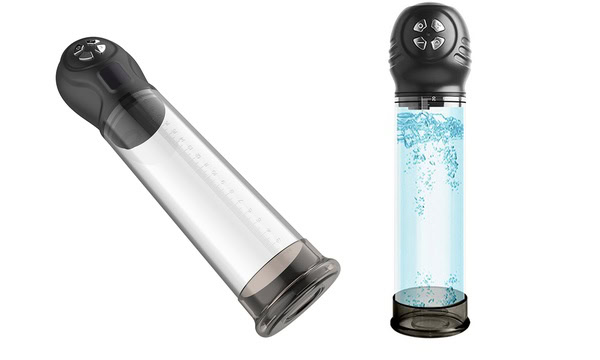
A penis pump is a cylinder that fits over the penis and uses a hand or battery pump to lower the air pressure inside it, drawing blood into the erectile tissue and producing an erection without medication. Doctors call it a vacuum erection device, or VED. It is an established, non-drug treatment for erectile dysfunction with decades of clinical use behind it, and it is also sold as a recreational toy. Those two uses share the same physics but demand very different expectations — and the recreational marketing around “permanent enlargement” is where almost all the harm in this category comes from.
This guide explains the mechanism, what a pump can and cannot do, how to use one safely, how to read the specifications that matter, and the specific warning signs that mean you should stop.
How a penis pump actually works
The penis contains two columns of spongy erectile tissue — the corpora cavernosa — that run along the top, and a third, the corpus spongiosum, underneath around the urethra. An erection happens when arteries feeding those columns dilate, the spongy tissue fills with blood, and the expanding tissue compresses the veins that would normally drain it. Blood goes in faster than it comes out, pressure rises, and the penis becomes rigid.
A vacuum pump reproduces the first half of that process mechanically. Lowering the air pressure around the penis creates a pressure differential across the tissue walls, and blood is pulled into the erectile columns from the surrounding circulation. Within one to three minutes most users reach a functional erection.
What a pump cannot do on its own is the second half — trapping the blood. Release the vacuum and the erection begins to drain immediately. This is why a constriction ring, worn at the base after pumping, is part of any pump used for intercourse. The ring holds the blood in place by compressing the superficial veins. Without one, a pump produces an erection that lasts as long as the cylinder is attached and not much longer.
Why the erection from a pump feels different
A pumped erection is often slightly cooler to the touch, sometimes a little more purple or bluish, and it pivots more freely at the base than a natural erection, because the tissue behind the constriction ring is not engorged. The girth can be slightly greater than a natural erection while the rigidity is slightly less uniform. None of this is a malfunction; it is what mechanical engorgement without full arterial inflow produces. It is worth knowing in advance so the first session is not alarming.
What a pump can and cannot do
This is the section that matters most, because the gap between marketing and reality in this category is enormous.
| Claim | Reality |
|---|---|
| Produces an erection sufficient for intercourse | Ja. This is the device’s established clinical function, effective for most users including many who do not respond to oral medication. |
| Works without drugs or side effects | Largely yes. No systemic medication is involved. Local side effects (bruising, numbness) are possible with misuse. |
| Usable after prostate surgery as part of rehabilitation | Often yes, and frequently recommended by urologists — but only on a clinician’s instruction and schedule. |
| Produces a temporary increase in size during and shortly after use | Ja. Swelling from engorgement is real and visible, and it subsides within an hour or two. |
| Produces permanent length or girth gain | NEIN. There is no good evidence that vacuum pumping permanently enlarges the penis. Repeated aggressive pumping in pursuit of this is the single most common cause of injury with these devices. |
| Cures erectile dysfunction | NEIN. It manages the symptom. It does not treat the underlying vascular, neurological, hormonal, or psychological cause — and ED is frequently an early warning sign of cardiovascular disease that deserves investigation. |
The honest summary: a penis pump is a good tool for producing an erection and a poor tool for changing your anatomy. Buying one for the first purpose usually works. Buying one for the second reliably disappoints, and the disappointment tends to drive people toward higher pressures and longer sessions, which is exactly the behaviour that causes harm.
Handbuch, battery or water: which type to choose
Manual hand pumps
A squeeze bulb or a pistol-grip trigger drives the pump. The advantage is control — you feel the pressure build in your hand and you can stop the instant anything feels wrong, and you can release it instantly. Manual pumps are also cheaper, have nothing to charge, and have fewer parts to fail. Für die meisten Menschen, and for every beginner, a manual pump is the right choice for exactly this reason.
Battery-powered pumps
A motor does the work, usually with a single button. Convenient, and genuinely valuable for anyone with limited hand strength, arthritis, or a grip problem. The trade-off is that a motor happily keeps pulling past the point where you would have stopped by hand. If you buy a battery pump, buy one with a pressure gauge and an automatic release valve, and treat those as requirements rather than upgrades.
Water pumps
Used in the bath or shower, these displace water rather than air. Because water is incompressible, pressure distributes more evenly around the shaft, which some users find more comfortable and less prone to the ring-shaped bruising that air pumps can cause at the cylinder rim. They are bulkier, restricted to the bathroom, and need thorough drying to avoid mould in the seal.
Specifications that actually matter
Cylinder diameter — the specification people get wrong
Fit is more important than any other number, and most people buy too wide. A cylinder should be roughly 6–12 mm wider than your erect girth diameter. Too narrow and the cylinder walls press on the shaft, restricting the expansion you are trying to create and risking abrasion. Too wide — the more common error — and the vacuum acts on the scrotum and surrounding tissue as well, which is uncomfortable, ineffective, and the usual cause of scrotal bruising.
Measure erect circumference with a soft tape at the thickest point, then divide by 3.14 to get diameter. Add 6–12 mm. That is your target cylinder bore.
Pressure gauge and release valve
A gauge turns guesswork into a number. Safe working range for a vacuum erection device is generally quoted as up to about 250 mmHg (roughly 10 inHg) of negative pressure, and most users need far less than that to achieve a full erection. Without a gauge you have no way to know whether you are at 100 or 400.
A quick-release valve is the genuinely non-negotiable feature. You must be able to drop the vacuum instantly, with one hand, without unscrewing anything. Any pump without one should be rejected regardless of price.
The base seal
A soft silicone or TPE sleeve at the cylinder opening does two jobs: it creates the airtight seal and it spreads the rim pressure over a wider area of skin. A hard plastic rim pressing directly into the pubic area is the classic source of a bruised ring at the base. Check that the seal is replaceable — it is the part that perishes first.
Constriction rings
If you intend to use the pump for intercourse, you need rings, and you need the right size. A ring should be snug enough to maintain the erection and loose enough to remove easily. Most kits ship with several sizes; start with the loosest that works. Purpose-made ED rings often have a small channel or gap to avoid compressing the urethra. Our guide to cock rings and how to size them covers fit and materials in detail, und die cock rings collection shows the options.
How to use a penis pump safely
- Trim. Pubic hair at the base prevents an airtight seal and gets painfully pulled into the cylinder. Trim short around the base before the first session.
- Lubricate the rim. A generous ring of water-based lubricant on the base seal and around the base of the penis makes the seal airtight and the removal painless. Water-based only if any part touching skin is silicone — silicone lubricant degrades silicone seals.
- Insert and seat. Place the cylinder over the penis and press it flat against the pubic bone until the seal is even all the way round. Check that the scrotum is clear of the opening.
- Langsam pumpen. A few strokes at a time, pausing between. You are aiming for a comfortable firmness, not maximum vacuum. Watch the gauge if you have one.
- Stop at the first sign of pain, pins and needles, or colour change to deep purple. Release immediately. Discomfort is not something to push through here.
- Limit the session. Fifteen minutes total is the usual guidance, and no single continuous vacuum longer than five minutes without releasing. If you want longer, release fully, wait a minute, and start again.
- If using a ring: roll it down onto the base of the cylinder before you start, so that once you have your erection you can slide it off the cylinder onto the base of the penis before releasing the vacuum.
- Release the vacuum fully before removing the cylinder. Pulling a cylinder off under vacuum is how people tear skin.
- Never leave a constriction ring on for more than 30 minutes. This is a hard limit, not a guideline. Restricting blood flow for longer risks tissue damage.
Risks, side effects and red flags
Used within the limits above, vacuum pumps have a good safety record. Used aggressively, they cause real injury. The realistic risks, in rough order of frequency:
- Petechiae — small red or purple dots from burst capillaries under the skin. Usually from too much pressure or too long a session. Harmless and self-resolving, but a clear signal to use less vacuum.
- Bruising — often a ring at the base from a hard rim or an ill-fitting seal, or scrotal bruising from an oversized cylinder.
- Numbness or a cold feeling — usually from a constriction ring that is too tight or worn too long. Entfernen Sie es.
- Trapped ejaculation — a tight ring can block ejaculate from leaving. Uncomfortable and alarming but not dangerous; use a looser ring or one with a urethral channel.
- Skin tears or blistering — from removing the cylinder under vacuum, or from a session far beyond safe pressure.
Do not use a penis pump without first speaking to a doctor if you take anticoagulants or have a bleeding disorder such as haemophilia or sickle cell disease; you have Peyronie’s disease or a significant penile curvature; you have priapism in your history; you have had penile implant surgery; or you have reduced sensation from diabetic neuropathy or a spinal injury, because you may not feel the pain that would otherwise warn you to stop.
Seek medical attention if an erection persists beyond four hours, if pain continues after removing the device, if you notice a new lump or a new curvature, or if bruising does not fade within a few days.
This article is general information, kein medizinischer Rat. Erectile dysfunction that is new, persistent, or worsening deserves a medical assessment — it is often the first visible sign of a vascular or hormonal condition that is worth catching early, and treating only the symptom means missing that.
Cleaning and maintenance
Wash the cylinder with warm water and unscented soap after each use, paying attention to the seal groove where lubricant collects. Rinse thoroughly and dry completely — a damp seal left in a drawer grows mould, and the seal is the part that touches you.
Never boil a pump cylinder; polycarbonate and acrylic distort with heat and a distorted cylinder will not seal. Inspect the cylinder for hairline cracks before each use. A cracked cylinder under vacuum can fail suddenly, and acrylic fails sharply.
Store constriction rings flat and away from other silicone items — different silicone formulations can react on contact and leave permanently tacky patches. Replace any ring that has lost its snap or developed a tear, and replace the base seal when it hardens or shows cracking.
Häufig gestellte Fragen
Do penis pumps permanently increase size?
NEIN. There is no good evidence that vacuum pumping produces permanent length or girth gain. Any increase you see immediately after a session is temporary swelling from engorgement and fluid, and it subsides within an hour or two. Pumping harder or longer in pursuit of permanent gain is the leading cause of injury with these devices.
How long does a pumped erection last?
Without a constriction ring, it begins to soften as soon as the vacuum is released — usually within a few minutes. With a correctly sized ring at the base, an erection can be maintained for intercourse, but the ring must be removed within 30 minutes.
Are penis pumps safe to use every day?
For most healthy users, short daily sessions within the pressure and time limits above are generally considered acceptable, and post-surgical rehabilitation protocols often involve daily use on a urologist’s schedule. If you see bruising or petechiae, reduce frequency and pressure. If you have a bleeding disorder, take anticoagulants, or have reduced genital sensation, get medical advice before any regular use.
Manual or electric — which is better?
Manual for beginners and for anyone who wants maximum control: you feel the pressure build and can stop instantly. Electric for users with limited hand strength or grip problems, and then only with a pressure gauge and an automatic release valve, because a motor will keep pulling past the point where your hand would have stopped.
What size cylinder do I need?
Measure erect circumference at the thickest point, divide by 3.14 for diameter, then add 6–12 mm. Too wide is the more common mistake and causes scrotal bruising and poor results; too narrow restricts the expansion you are trying to create.
Can a penis pump help after prostate surgery?
Vacuum devices are frequently used in penile rehabilitation after prostatectomy, and many urologists recommend them. The protocol, timing and pressure should come from your surgeon or urologist rather than from a product manual, and you should not start without that instruction.
Why does my penis look purple after pumping?
Some darkening is normal from venous engorgement and fades quickly. Deep purple, mottling, or colour that does not return to normal within minutes means the pressure was too high or the session too long. Release immediately and use noticeably less vacuum next time.
Does a penis pump work for everyone with erectile dysfunction?
Most users can achieve a functional erection with a vacuum device, including many who do not respond to oral medication, which is why it remains a standard second-line option. It is less effective where there is significant venous leakage or extensive scarring from Peyronie’s disease. A urologist can tell you which applies.
Verwandte Leitfäden
If you are exploring toys for external stimulation alongside a pump, our guide to vibrierende Masturbatoren covers stroker design and motor placement, und die Sammlung männlicher Masturbatoren shows the range. For constriction rings, see our cock ring sizing guide. Lubricant compatibility is covered in our guide to lubricants — relevant here because the base seal on most pumps is silicone, and silicone lubricant will degrade it. For broader external stimulation, unser Stabvibratorführung explains how rumble differs from buzz, und die vibrators collection covers the category.
Pumps, rings and related products
Unser Penispumpen collection carries the vacuum devices described in this guide, Und Schwanz klingelt covers the constriction rings you need if you intend to use a pump for intercourse — size them as described above, loosest first.
For lubricant to seal the cylinder rim, see lubricants; water-based is the right choice if any part touching skin is silicone. For external stimulation alongside a pump, unser massage wand vibrators include the full-size 60 mm wand.

